DPG & DXG l Aftertreatment Testing Systems
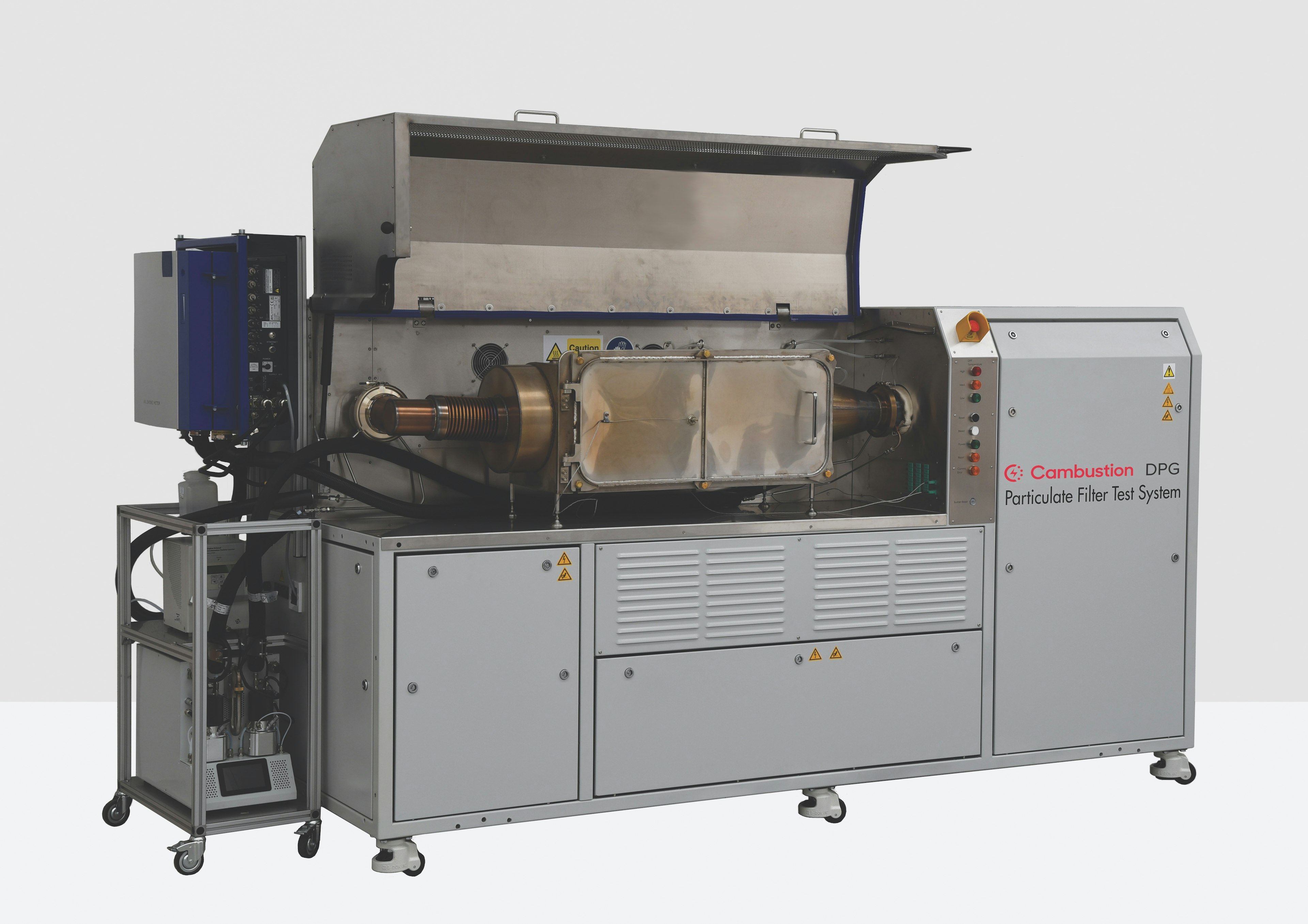
Cambustion Particulate Filter Test System (DPG)
Generating reproducible results from Diesel and Gasoline Particulate Filters testing in an engine test cell is expensive and time consuming. These drawbacks were the motivation behind creating the Cambustion Particulate Filter Testing System (DPG).
For 15 years, the Cambustion DPG has been in use worldwide for the automated testing of Diesel and Gasoline Particulate Filters.
Based around a Diesel fuelled burner, high power electrical heaters and accurate flow bench, the DPG performs testing of GPFs and DPFs at flows and temperatures covering light to heavy duty applications.
The DPG is used in both Production Quality Assurance (QA) testing and for R&D applications. Tests can be made to industry or international standards, e.g. soot load vs filtration efficiency or pressure drop (Volkswagen PV3637), fresh or empty filtration efficiency (Volkswagen PV3637) and spark arrestor testing (EN1834).
In R&D, the DPG offers filter developers a faster and more repeatable comparison of different filter designs and coatings than engine testing. For vehicle and engine developers it provides fast soot loading of filters for regeneration strategy and calibration development. Optional systems including Number- and Mass- based filtration efficiency measurement, ash generation, oxygen control and NOx generation allow a wider range of aftertreatment component testing.

DXG Aftertreatment Aging and Testing System
The Cambustion DXG is a new system for aging and performance tests of aftertreatment systems.
DPG Filter Testing Applications
Soot Loading vs Pressure Drop - PV3637
The DPG is the industry standard tool for characterising the pressure drop vs soot load curve. It is used by all major Tier 1 suppliers of particle filters. The Volkswagen PV3637 protocol is based around the Cambustion DPG as the standard test bench for characterising filters.
Ash Loading
The DPG system can be equipped with an online fuel additive system. To generate ash, engine oil or oil additive pack is metered with the diesel fuel directly into the main flame, or into the hot burner exhaust, to accurately simulate different modes of ash generation. This technique is used to study the ash deposition characteristics, and to quantify ash's effect on aftertreatment performance.
Filtration Efficiency
Particle mass and/or number measurement can be included within a DPG system. Both options include upstream and downstream measurement with automatic calculation of the filtration efficiency. Empty filtration efficiency can be studied using a short burst of particles to avoid particle loading affecting the measured filtration value.
Regeneration Testing
The DPG can load soot onto filters at a rapid and repeatable rate and then simulate active regeneration conditions to determine maximum allowable soot load or confirm thermal durability. Repeated test cycles can be run without manual intervention, with automatic detection of filter failure.
Cold Flow Tests
The DPG can also make cold flow tests, and results may be corrected to any set of reference conditions.
Advantages
Compared with engine testing, the DPG offers significantly improved repeatability and much lower capital and operating costs than an engine test facility: infrastructure requirements are minimal, tests are highly automated and high soot generation rates maximise throughput while minimising fuel and energy consumption.
The DPG allows customers to study the behaviour of a filter without the corresponding difficulties associated with engine tests, avoiding issues such as passive regeneration due to NOₓ and engine / filter interactions due to backpressure.
The DPG uses a combination of fuel burner and electrical heating allowing testing with or without soot generation.
Other Applications
For a list of Application Notes which offer detailed guidance on common uses of the DPG, click here.
Aftertreatment Aging
The new DXG is based on the DPG, enhanced with additional systems for the requirements of aftertreatment aging and testing. The DXG includes control of the test gas composition - CO₂, H₂O, NOx, SOx and oil-derived poisons and has enhanced flow and temperature capabilities to reproduce the severe conditions causing rapid aging of aftertreatment systems for larger engines. Aging may follow standards such as the US Federal 40 FCR 1065 or DAAAC, or may be customer-specific.
The system also integrates with gas analysis instrumentation for performance testing of aftertreatment catalysts. These tests can be combined with aging cycles to automatically monitor degradation, or can be used in R&D for catalyst development or selection, or for calibration mapping.
Spark Arrestor Testing - EN1834
In order to safely operate a Heavy Duty combustion engine in a potentially explosive environment, care must be taken in the design of the aftertreatment system to arrest any sparks or particles with potential to ignite. The EN1834 Spark Arrestor Protocol outlines testing procedures for engine aftertreatment systems on-engine and using a flow bench.
The Cambustion Particulate Filter Test System (DPG) can now perform the EN1834 Spark Arrestor Testing protocol. The DPG doses a non-combustible mass of particles into a controlled air flow, generating the conditions stipulated by the standard for a specific engine specification. To calculate collection efficiency of the spark arrestor, the DPG compares the total dosed mass and the downstream capture filter mass. Repeating this procedure at different conditions with different sized aerosols generates the nine results required to satisfy the EN1834 protocol.
Controlled NOx Generation
The DPG can be fitted with a system to generate a controlled concentration of NOx independent of other test parameters. This allows simulation of passive regeneration, the testing of other aftertreatment components and mapping of aftertreatment performance in ECU calibration applications.
R&D Applications
In an R&D environment the DPG provides an economic solution for soot and ash loading of filters, catalytic activity comparison between coatings, and durability studies. The control software can be easily configured to interface with an array of instruments and analysers to monitor all possible aspects of particle filter behaviour.
Key Application Notes
| Title | Data Type | Download File | Size | Last Updated | |||||
|---|---|---|---|---|---|---|---|---|---|
| Title | DPG Repeatability | Data Type | Application note | Download File | dpg007v2-dpg-repeatability.pdf | Size | 213.84 KB | Last Updated | |
| Title | Cold flow DPF testing with the DPG | Data Type | Application note | Download File | dpg-003v2-cold-flow-testing.pdf | Size | 243.36 KB | Last Updated | |
| Title | Gasoline Particulate Filter (GPF) testing | Data Type | Application note | Download File | dpg012_v2-gpf-testing.pdf | Size | 235.49 KB | Last Updated |
Need more information?

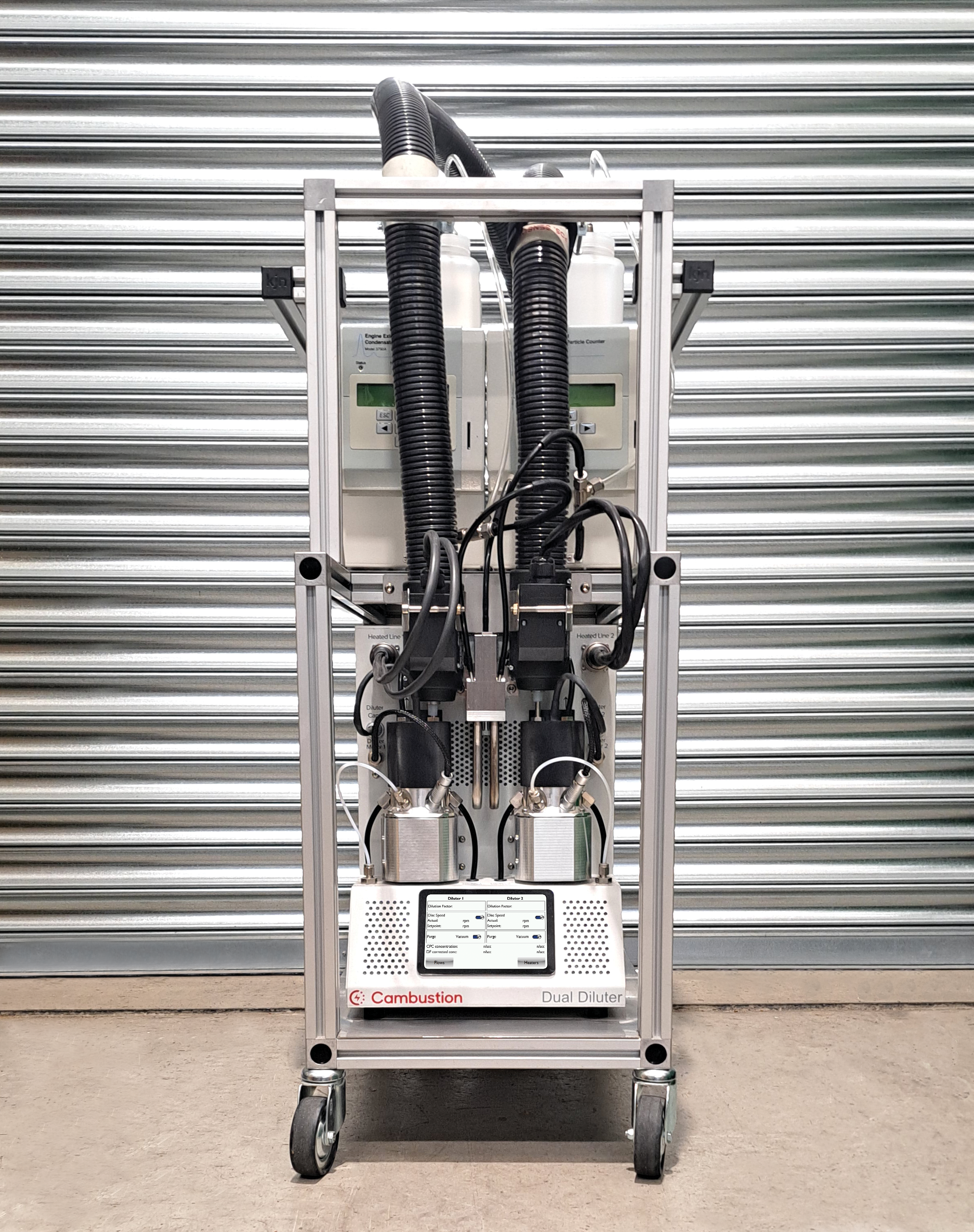
Dual Simultaneous Diluter Accessory
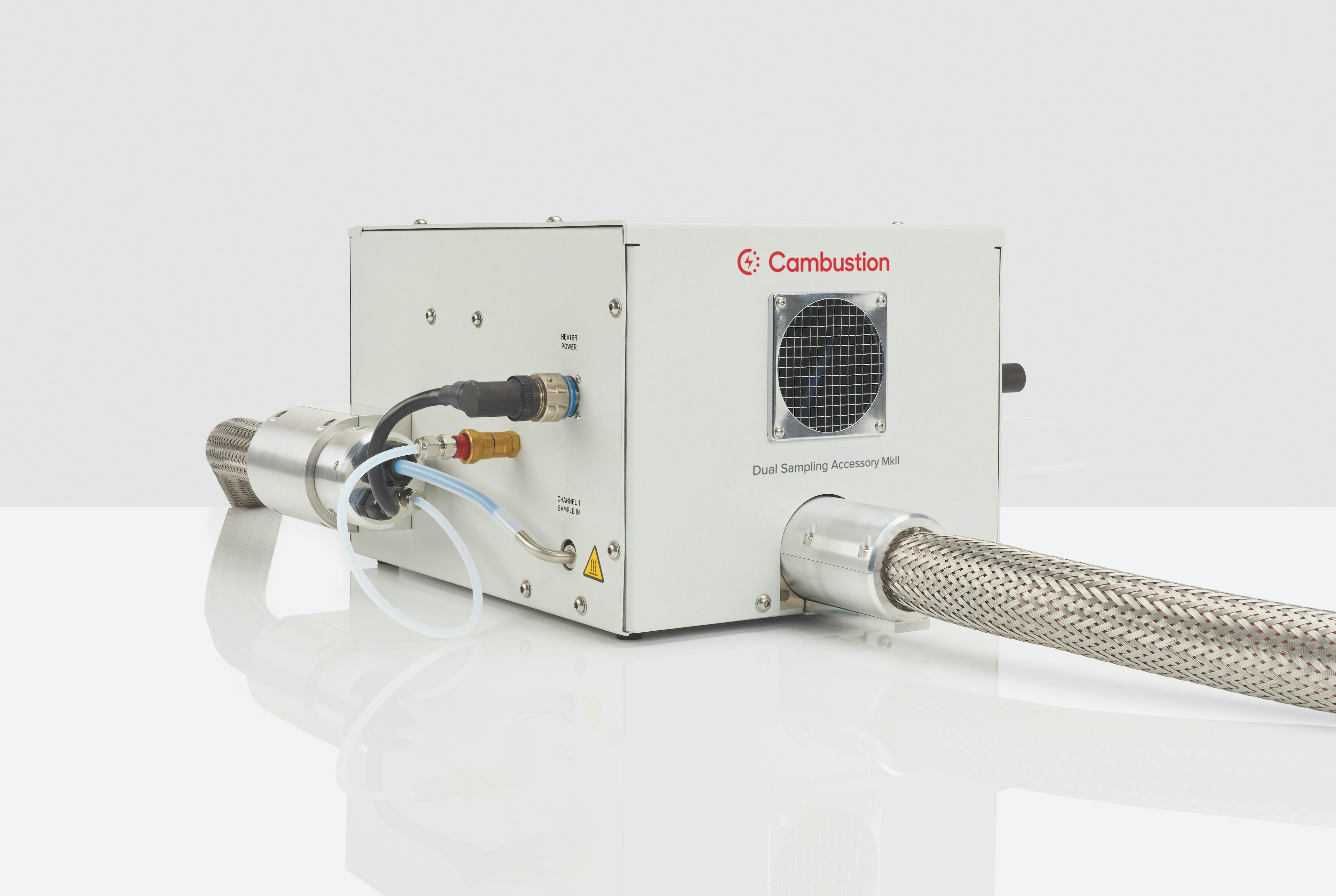
The dual simultaneous diluter (DSD) system is designed for sampling upstream and downstream of a particulate filter. The DSD can work with one or two CPCs. Dual CPC configuration allows the user to measure the PN filtration efficiency performance in real time
Filter Test Housing accessory for bare brick testing
Cambustion offer a Filter Test Housing (FTH) for use with the DPG. This reusable DPF housing allows an uncanned filter to be fitted to the DPG and loaded / regenerated as required. The filter can be quickly removed for weighing and examination, even at elevated temperatures.
This ability is particularly advantageous in both R&D and Quality Control applications, and allows filters to be tested before coating or other final processes take place.
DPF&GPF Testing Service
Cambustion also offer a filter loading / testing service, using the DPG. For more information please see our Engineering Services pages.
DPF Testing Service
Fundamental DPF performance tests which are becoming the basis for Industry-wide Standards. Cambustion provides a confidential, UK-based testing service to determine these characteristics on behalf of customers using a DPF testing system.