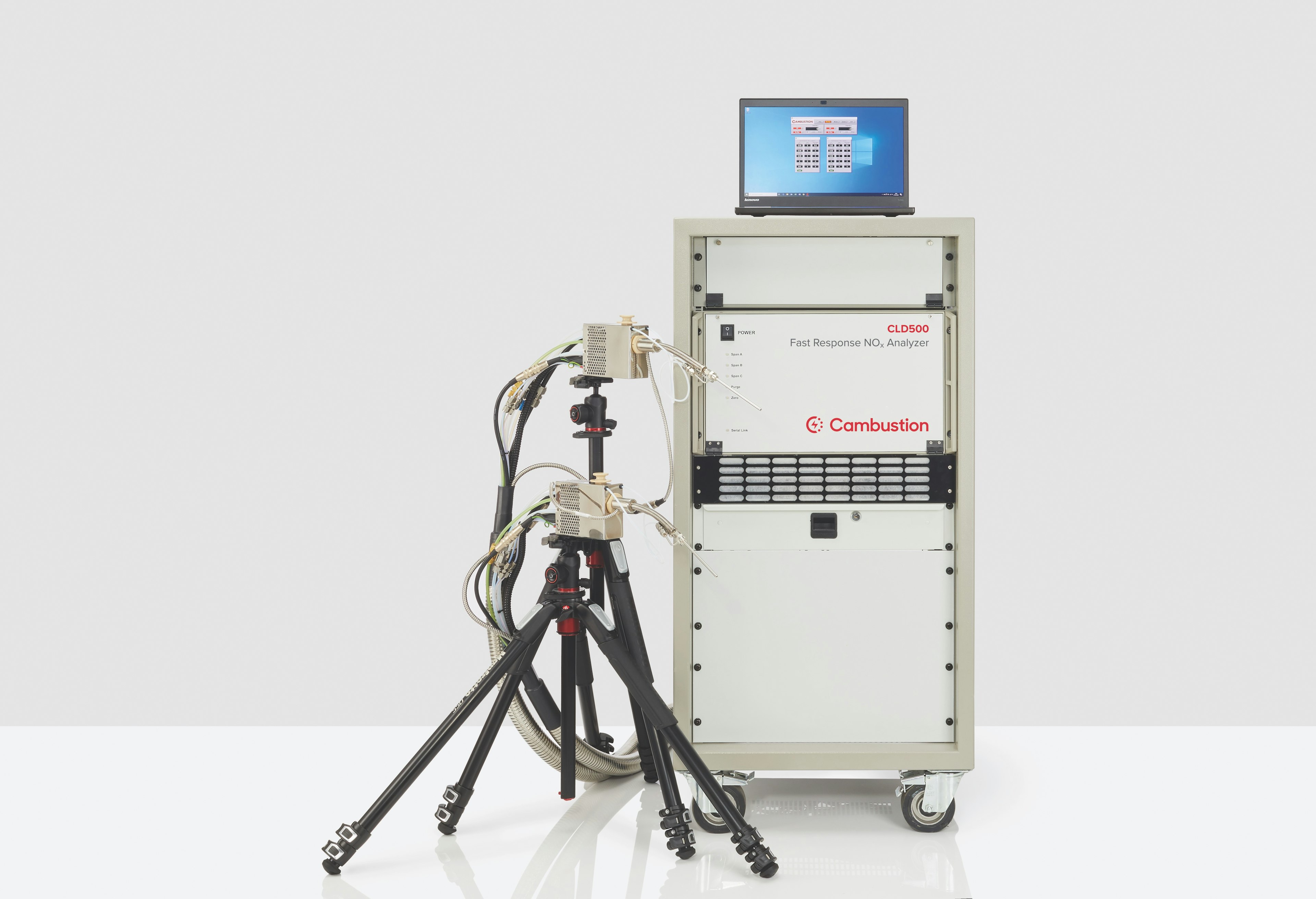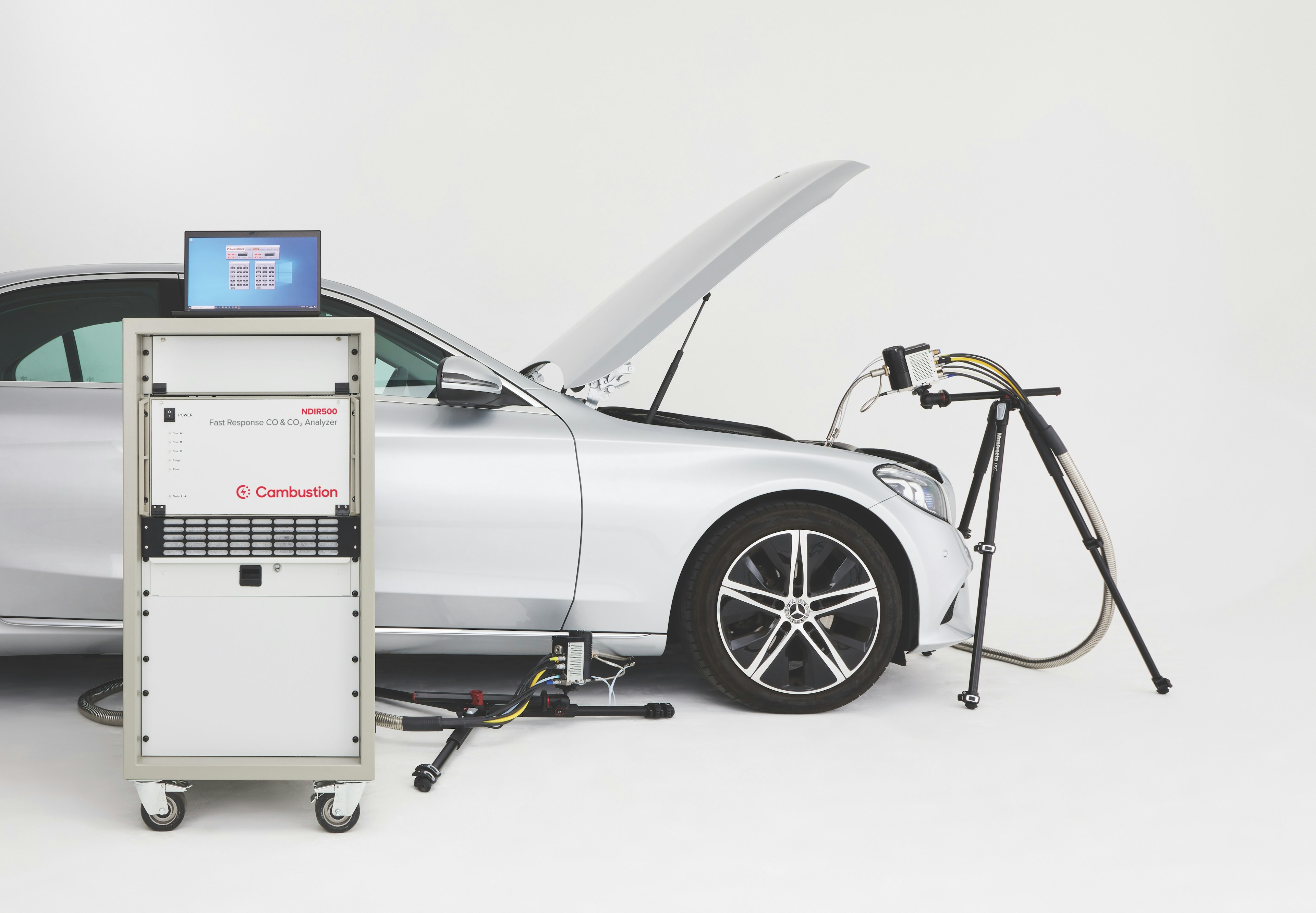
HC Analysers
Conventional FID 1-2 second response time
Cambustion Fast FID 1-10 millisecond response time
The need for fast hydrocarbon analysers
During the 1-2 seconds it takes a conventional FID to respond, an engine will undergo many firing cycles. The conditions inside the combustion chamber can vary significantly between successive firing cycles- particularly when the engine conditions are changing rapidly such as during engine start or speed/load transients. Cambustion fast FIDs have a time response as low as 1 millisecond T10-90. This allows the analysers to distinguish between two adjacent firing cycles, and even offer information about the variation in HC concentration during a single exhaust stroke.
An intermittent or continuous point source release of a concentrated HC-containing gas tracer disperses under the influence of airflow, thermal gradients and surrounding obstacles. Measurements with high frequency instruments in a wind-tunnel, allow for resolution of variable mixing and dispersion, supporting understanding of aerodynamic behaviours and more complex interactions in the ambient environment.
Additionally, FID is an industry standard measurement technique for measuring volatile organic compounds (VOCs). Short duration, high concentration releases can often be missed by conventional analyzers. Our FID's do not allow VOC speciation, but instead offer a picture of total VOCs.
Benefits of fast emissions analysers
Accurate measurement of exhaust emissions brings valuable insights into engine operation, and assists calibration engineers in reducing the engine out emissions. This can assist in emissions compliance while reducing after-treatment costs. The fast FID (sometimes known as an fFID) is carefully designed and calibrated to be linear to well above misfire HC levels (e.g. 44,000 ppm C₃ for a complete stoichiometric misfire in a gasoline engine) so that accurate concentrations during these important events can be recorded.
For gas turbines, an improved time response allows for rapid traversing and spatial mapping of combustors or wider rigs, thus reducing run time while improving the resolution of measurements.
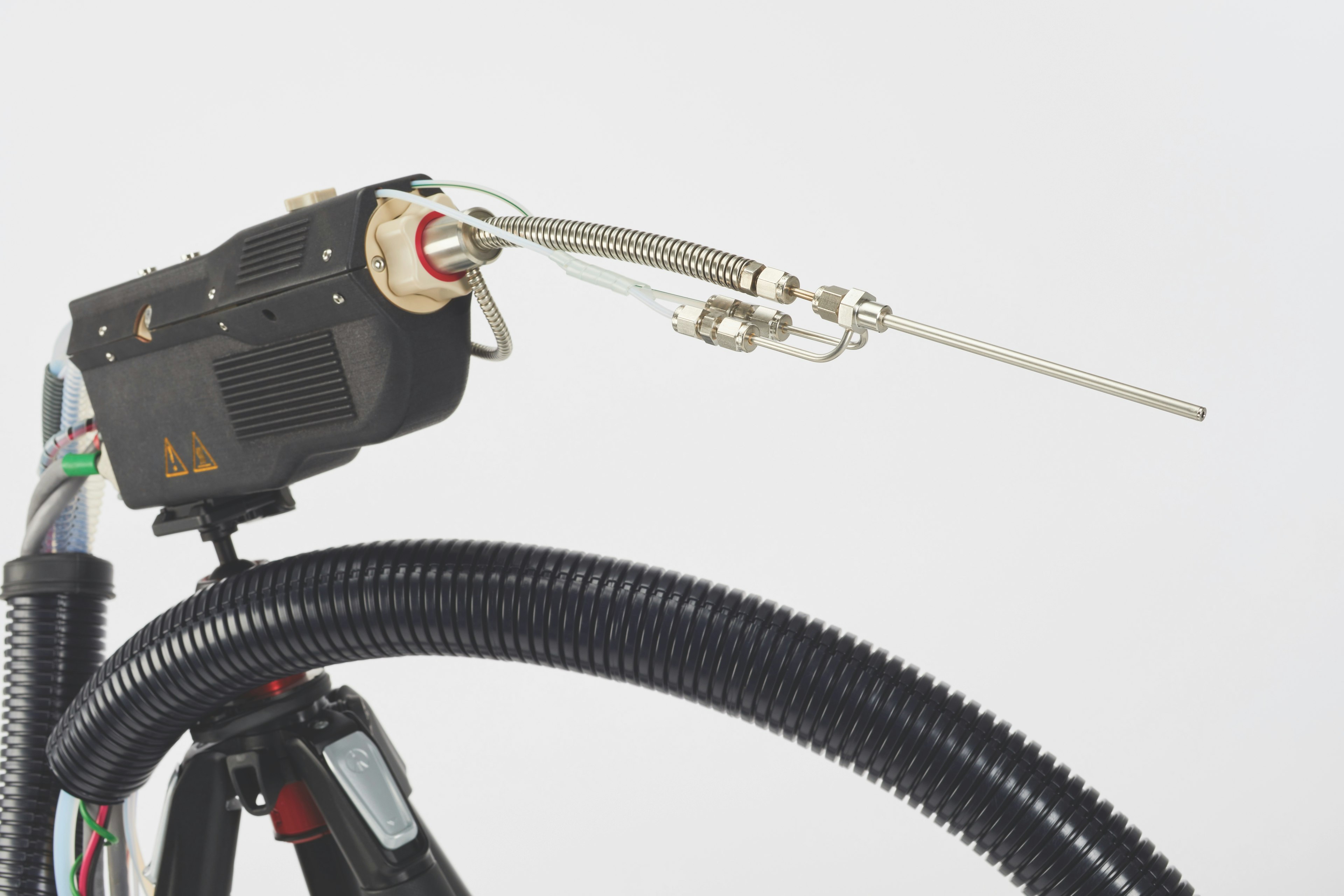
Cambustion HC Analyser Range
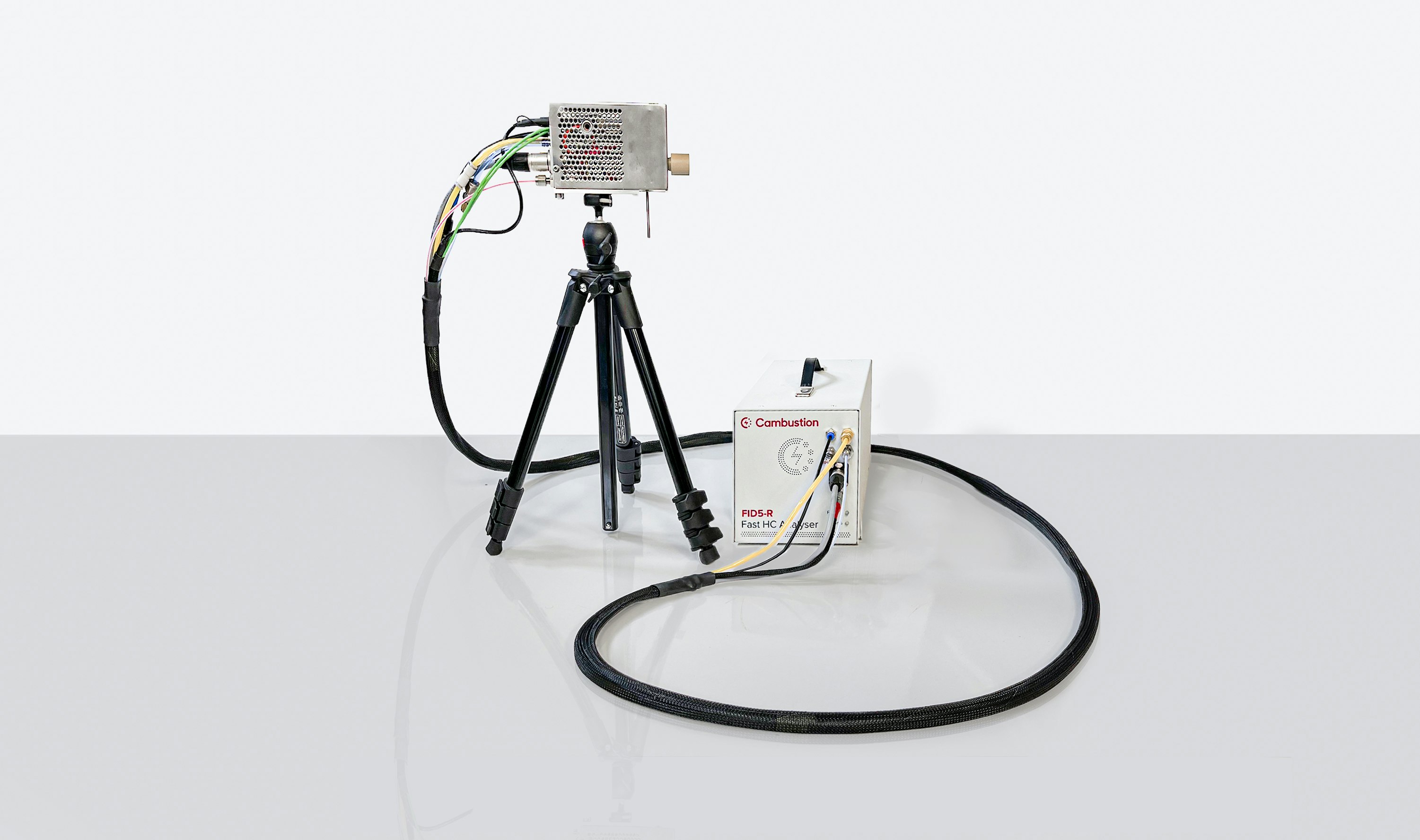
FID5
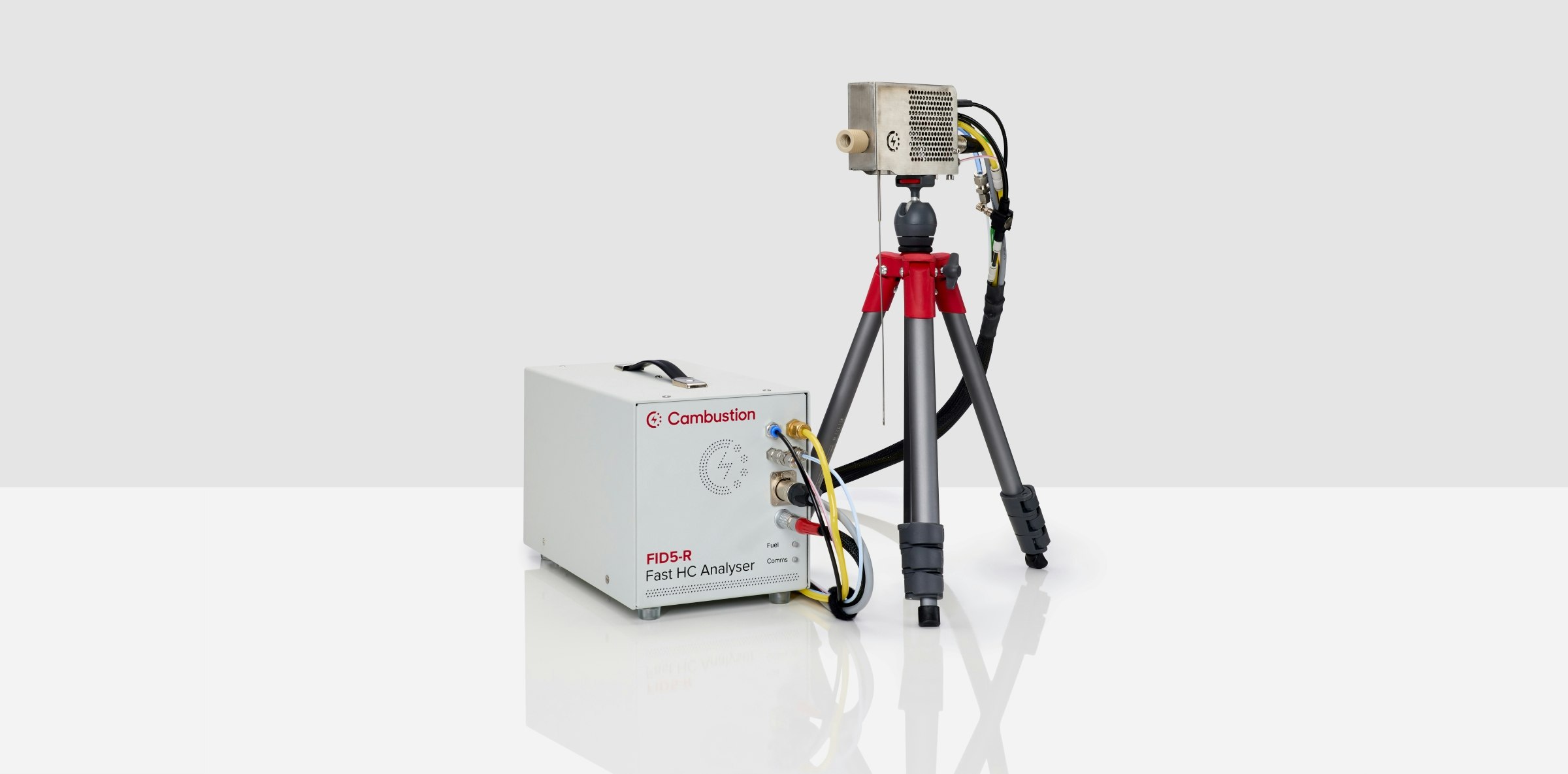
The FID5, introduced in 2024, is the latest in a collection of ultra-fast response hydrocarbon analysers. This unit boasts impressive portability and ease of use while still retaining Cambustion's signature millisecond time-response.
Weighing no more than 5kg, the FID5 is optimised for ambient and mobile applications where the use of a heated line is not necessary. Sensitivity is improved over the FID50 and HFR500 at the expense of the ability to measure at varying sample pressures.
Additionally, the FID5 is particularly suitable for measuring volatile organic compounds (VOCs) due to it's high sensitivity and low sample flow rate, thus allowing for an non-intrusive method of sampling total VOC from a point release.
Find out more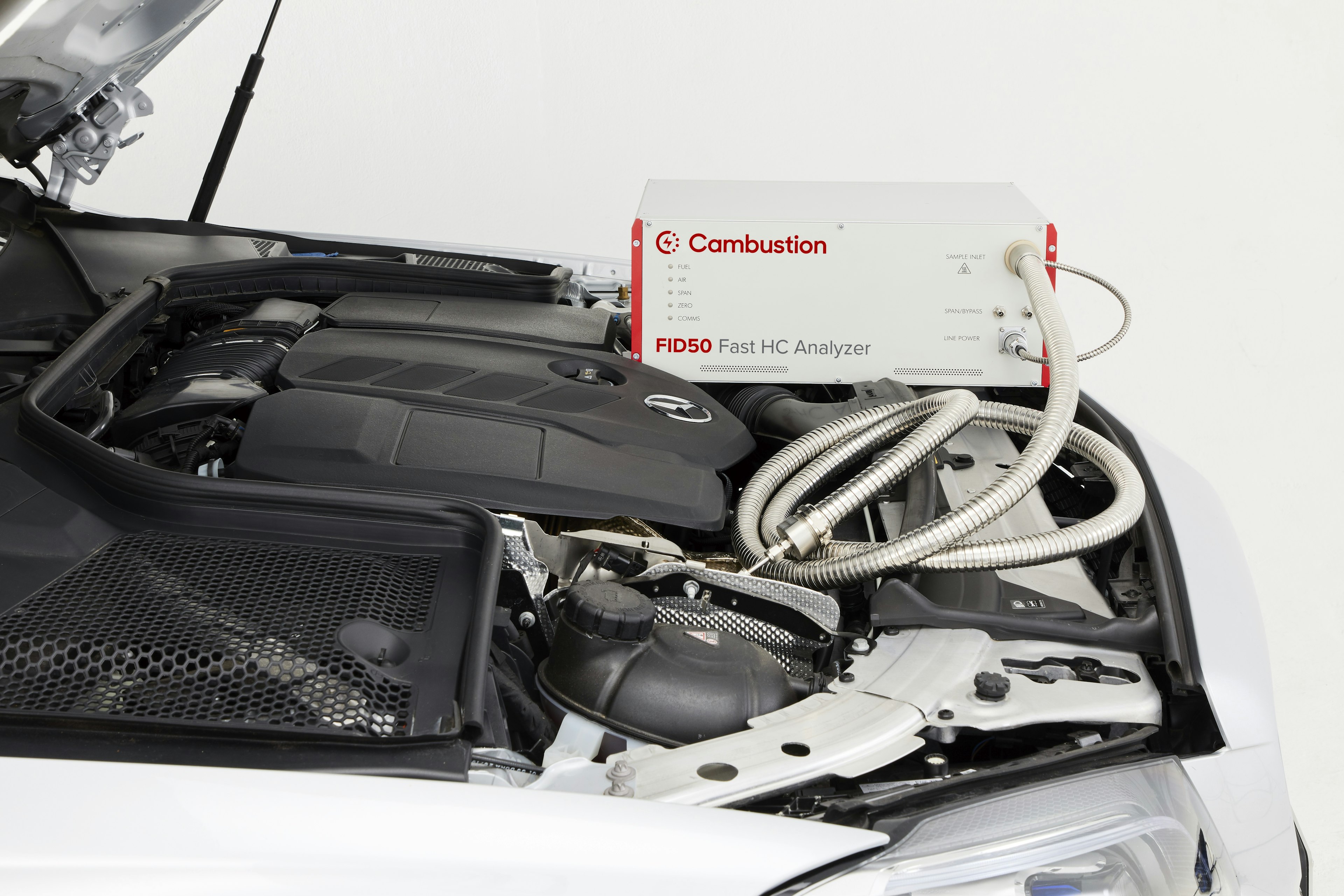
Fast FID
Released in 2020 is the FID50, our fast FID designed for both engine and non-engine single channel applications where a 15 ms T10-90 response time is sufficient.
Typical applications include pre- or post-catalyst engine exhaust THC measurement, rapid leak detection from HC gas-carrying pipelines, mobile THC measurement, wind tunnel measurement of HC tracer gas mixing & dispersion, feedback control of biogas production and other process control applications.
Find out more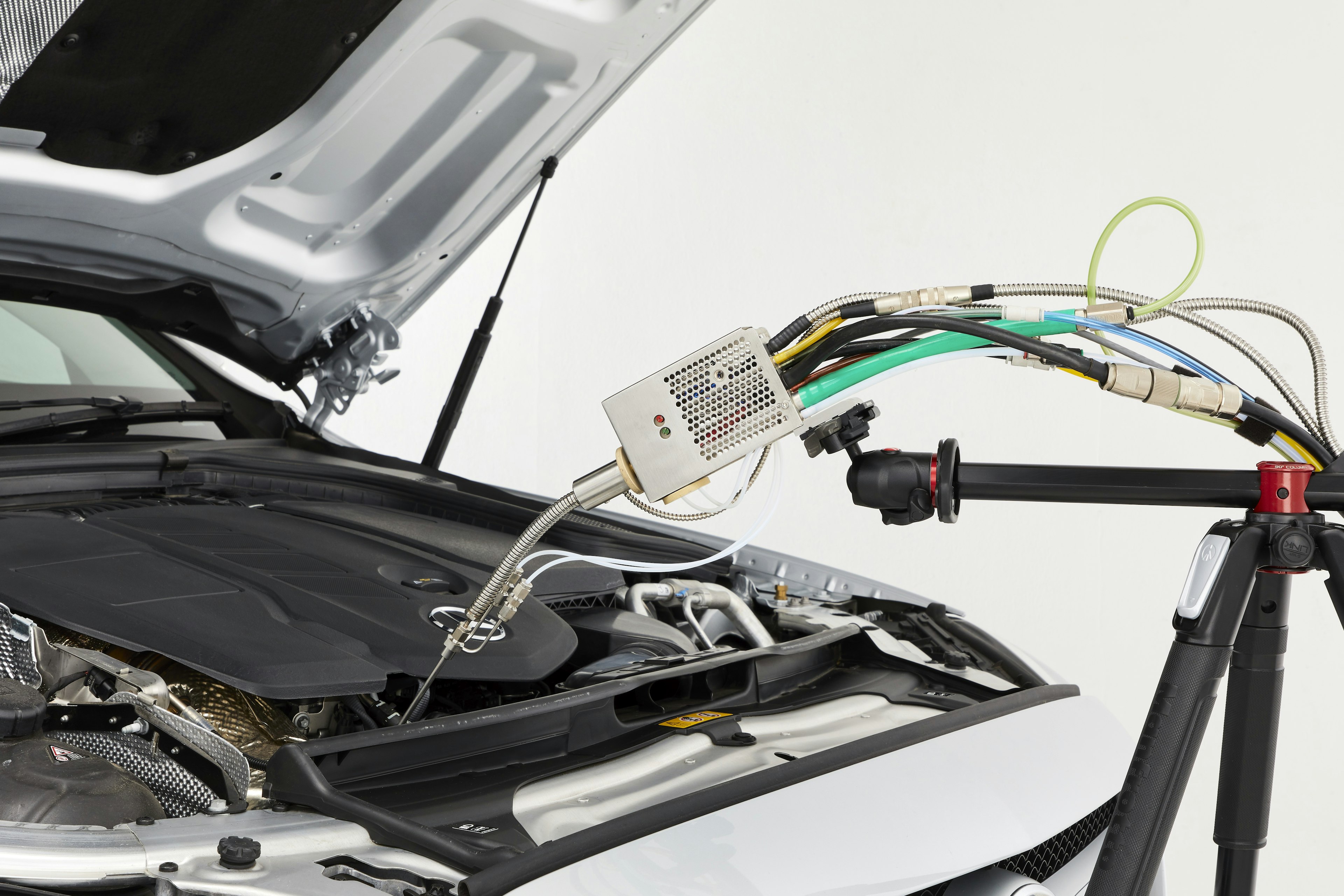
HFR500 two channel analyser
Introduced in 1998, the HFR500 is a two channel analyser capable of measuring engine-out and tailpipe THC simultaneously for cold start and catalyst heating strategy optimisation. It is also configurable for sub-zero testing and also for sampling in individual exhaust ports at turbo pressures to study cycle-by-cycle HC emissions; a technique often used to study the gas exchange processes in VVT and 2-stroke combustion systems. The measurement of methane slip on gas or diesel/gas engines has been performed and via use of a “sampling spark plug”, sampling from inside the operating combustion chamber is also possible.
The HFR500 is available with support for AK protocol.
Find out moreApplications
For all gasoline engines (port- or direct-injection) the most challenging phase of operation (from an emissions viewpoint) is the cold start. (Download a pdf presentation about gasoline cold start calibration)
The cold catalyst is initially unable to convert any of the engine-out emissions, and these therefore reach the tailpipe. Since in a cold gasoline engine the vaporization of the fuel is poor, additional fuel (i.e. more than stoichiometric ratio alone requires) must be injected during crank, to achieve an ignitable mixture in the cylinder. The rapid heat release caused by the first firing cycle leads to a rapid vaporization of this excess liquid fuel, and the second firing cycle may easily be rich, leading to high concentrations of unburnt hydrocarbons in the exhaust.
The fast FID's unique ability to measure cycle-by-cycle HC emissions during and after start allows engineers to optimize engine calibration for cold start; maintaining startability while minimizing these highly significant HC emissions.
Alternative fuels such as ethanol (or a mix of gasoline and ethanol) have different vaporization characteristics and require additional calibration for cold start.
Once the engine is running, transients in speed and load can lead to hydrocarbon "spikes" (brief periods of high emission), since the airflow into the engine can change more quickly than the fuel. Conventional analysers with time responses of around a second can not resolve these events, but Cambustion's fast HC analysers offer valuable data about the exhaust HC concentration, on a cycle-by-cycle and cylinder-by-cylinder basis.
To learn more about the application of fast HC analysers please contact Cambustion's leading engineers.
For more information on these and other applications please see Applications & Sample data.
Key Application Notes
| Title | Data Type | Download File | Size | Last Updated | |||||
|---|---|---|---|---|---|---|---|---|---|
| Title | Combustion instability detection during catalyst heating phase of GDI cold start | Data Type | Application note | Download File | hfr09v01-gdi-cold-start-catalyst-heating-strategy-combustion-instability.pdf | Size | 556.60 KB | Last Updated | |
| Title | Flame Traverse Sampling | Data Type | Application note | Download File | cld06v01-fast-gas-analysis-traversing-a-methane-flame.pdf | Size | 1.69 MB | Last Updated |